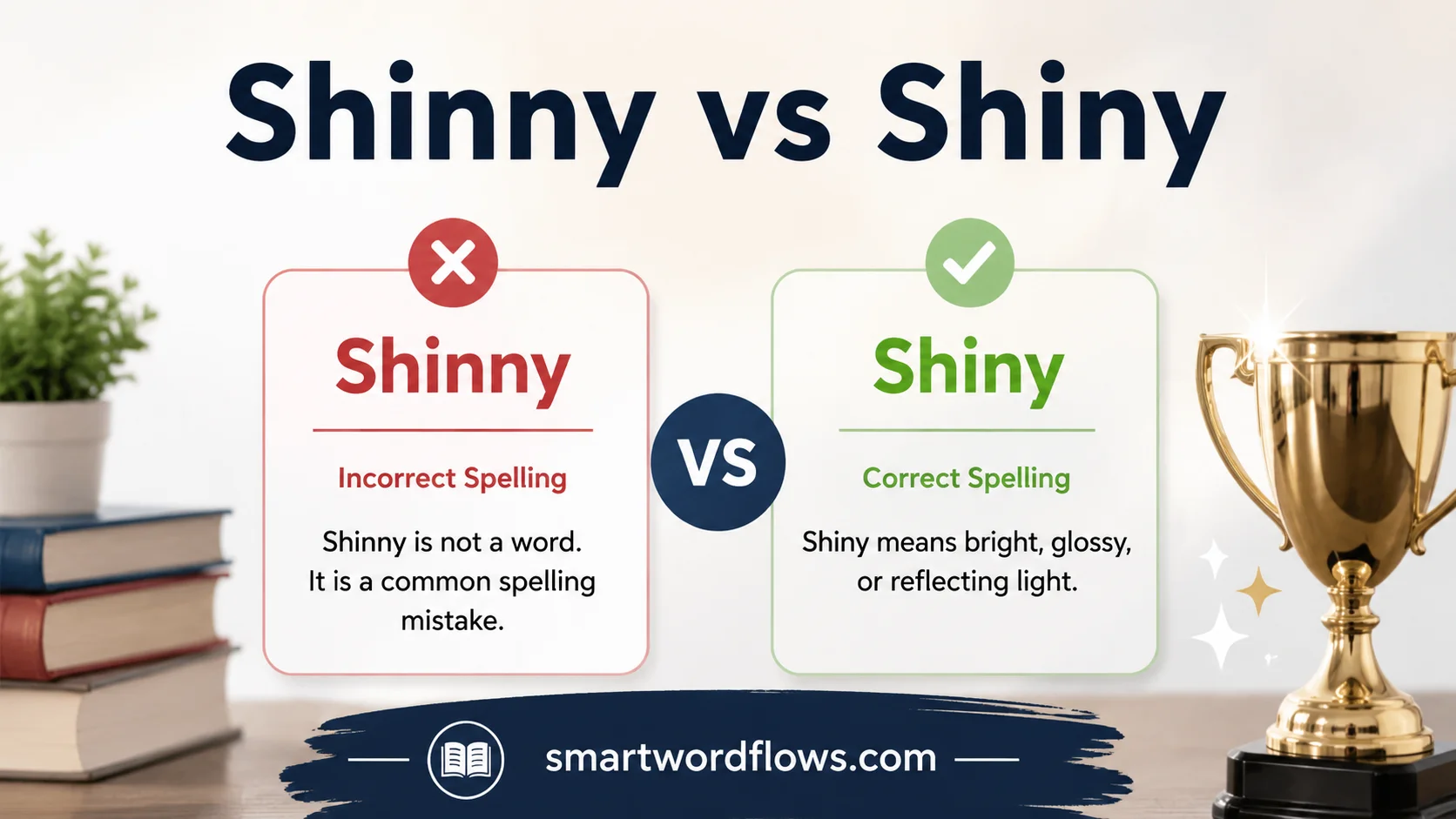

Shinny vs Shiny: Which Spelling Is Correct? Meaning, Differences, and Examples is a common question among English learners, writers, and students. The two words have a similar spelling and sound almost the same, but their meanings are different. Shiny is the correct word for something bright, glossy, polished, or reflective. Shinny is also a real word, but it has a specific meaning related to a traditional sport similar to hockey. Shiney is a common spelling mistake.
Understanding the difference helps improve writing, grammar, and clear communication. In emails, blogs, academic content, product descriptions, and everyday writing, using the wrong form can make a sentence look confusing, awkward, or unprofessional. Many people feel unsure because pronunciation can make the incorrect spelling seem natural. A simple way to remember the proper usage is to check the meaning, context, and exact spelling before choosing the word. This improves clarity, confidence, and overall writing quality.
Quick Answer
The correct spelling depends on the meaning you want to express.
| Word | Correct Meaning | Part of Speech | Example |
| Shiny | Bright, glossy, polished, or reflecting light | Adjective | The new phone has a shiny surface. |
| Shinny | An informal hockey game or climbing action | Noun/Verb | The children played shinny on the frozen lake. |
If you are talking about something that looks bright, clean, or polished, use shiny.
Correct: The car has a shiny finish.
Incorrect: The car has a shinny finish.
If you are talking about a casual hockey-style game or climbing using your arms and legs, use shinny.
Correct: They played shinny after school.
Correct: He shinnied up the tree.
In most everyday writing, shiny is the word you will need.
Comparison Overview
The difference between shinny vs shiny comes down to meaning, usage, and context. Although the two words differ by only one letter, that small spelling change completely transforms the meaning.
Here is a quick comparison:
| Feature | Shiny | Shinny |
| Spelling | S-H-I-N-Y | S-H-I-N-N-Y |
| Common Usage | Very common | Less common |
| Meaning | Having a bright or reflective surface | A hockey-like game or climbing movement |
| Word Type | Adjective | Noun or verb |
| Used For | Objects, surfaces, appearance | Sports or physical actions |
| Example | A shiny diamond | A game of shinny |
The easiest way to remember the difference is this:
Shiny describes how something looks. Shinny describes something someone does.
For example:
- A shiny watch catches light.
- A player participates in shinny.
- A shiny floor looks polished.
- A person can shinny up a pole.
The extra “n” in shinny creates a completely different word instead of a different spelling of the same word.
Main Differences Between Shinny vs Shiny
Understanding the main differences between shinny vs shiny prevents confusion and improves your writing accuracy. Let’s explore each difference in detail.
Meaning Difference Between Shiny and Shinny
The biggest difference is the meaning.
Shiny describes an object’s appearance. It tells readers that something reflects light or has a smooth, polished surface.
Common things that can be shiny include:
- Jewelry
- Cars
- Shoes
- Floors
- Metals
- Hair
- Glass
- New electronics
Examples:
- Her silver bracelet looked shiny under the sunlight.
- The freshly washed car had a shiny exterior.
- The child’s shoes were still shiny because they were brand new.
The word shinny, however, describes an activity.
Historically, shinny referred to an informal type of hockey played without the strict rules of organized hockey. It was often played outdoors on ice, fields, or streets.
Examples:
- The neighbors gathered for a game of shinny during winter.
- The children enjoyed playing shinny after school.
The word can also work as a verb. In this case, it means climbing by using your hands and legs.
Example:
- The young explorer shinnied up the tree to reach the branch.
Spelling Difference Between Shinny and Shiny
The spelling difference is small but important.
Shiny
Spelling:
S-H-I-N-Y
It contains one “n” before the ending “y.”
Example:
- The mirror looks shiny.
Shinny
Spelling:
S-H-I-N-N-Y
It contains two “n” letters.
Example:
- They played shinny on the frozen pond.
A useful memory trick:
Shiny has one “n” because it describes one thing you see.
Shinny has two “n” letters because it involves movement or action.
This is not a formal grammar rule, but it can help you remember the difference.
Grammar Difference Between Shiny and Shinny
Another important difference between these words is how they function in a sentence.
Shiny as an Adjective
An adjective describes a noun.
Examples:
- A shiny diamond
- A shiny car
- A shiny surface
In each example, shiny gives information about the appearance of something.
Sentence structure:
Shiny + noun
Examples:
- shiny shoes
- shiny metal
- shiny hair
Shinny as a Noun
As a noun, shinny names a game.
Examples:
- We played shinny yesterday.
- Shinny was popular among local communities.
Shinny as a Verb
As a verb, shinny describes climbing.
Examples:
- The child shinnied up the tree.
- He shinnied across the narrow space.
Why Do People Confuse Shinny and Shiny?
Many English learners and native speakers confuse these words because they share several similarities.
Similar Appearance
Both words begin with the same letters:
S-H-I-N
Only one extra letter separates them.
This makes the eye naturally connect them as related words, even though their meanings are different.
Similar Pronunciation
In some accents, people pronounce shinny and shiny almost the same way. When people hear a word instead of seeing it written, they may choose the wrong spelling.
For example:
Someone hears:
“The ring is ___.”
They may write:
“The ring is shinny.”
But the correct spelling is:
“The ring is shiny.”
Fast Writing Habits
When people type quickly, they often rely on memory instead of checking meaning. Since “shinny” looks close to “shiny,” the mistake happens easily.
A simple solution is to ask:
Am I describing an appearance or an action?
- Appearance = shiny
- Action/game = shinny
What Does Shiny Mean?
Shiny means having a surface that reflects light. It describes something that appears bright, smooth, clean, or polished.
The word often creates a visual image in the reader’s mind. When someone says “a shiny object,” most people imagine something that catches attention because it reflects light.
Common examples include:
- A polished silver spoon
- A freshly waxed vehicle
- A new pair of shoes
- A bright gemstone
- Healthy-looking hair
A shiny surface usually appears smooth because light bounces off it evenly.
For example:
A rough piece of metal scatters light in many directions, so it looks dull. A polished piece of metal reflects light more clearly, making it appear shiny.
Read More: Maintained vs Maintenanced: Differences Explained
Examples of Shiny in Sentences
Here are some examples showing how to use shiny correctly:
- The children admired the shiny decorations on the Christmas tree.
- She bought a shiny black handbag for the event.
- The athlete polished his trophy until it became shiny.
- The shiny surface of the lake reflected the mountains.
- Her hair looked shiny after using a moisturizing treatment.
- The new kitchen appliances had a shiny stainless-steel finish.
Different Contexts Where Shiny Is Used
The word shiny appears in many areas of daily life.
| Context | Example |
| Fashion | She wore shiny shoes to the party. |
| Technology | The laptop has a shiny screen. |
| Vehicles | The motorcycle has a shiny finish. |
| Beauty | The product makes hair look shiny. |
| Nature | The shiny leaves reflected sunlight. |
| Jewelry | The diamond looked shiny under the lights. |
What Does Shinny Mean?
Shinny is an older and less common English word with two main meanings.
The first meaning relates to a sport.
A shinny game is an informal version of hockey. It does not usually follow professional hockey rules and often happens casually among friends or communities.
Historically, people played shinny in outdoor spaces, especially in colder regions where frozen lakes and ponds provided natural playing areas.
A shinny game may include:
- A simple stick
- A ball or puck-like object
- Informal teams
- Basic rules
It represents a casual, community-based form of play.
The second meaning of shinny is climbing.
As a verb, to shinny means to climb something by gripping it with your hands and pushing with your legs.
Example:
- The worker shinnied up the pole carefully.
This use appears less often in modern conversation, but it remains a valid English word.
Examples of Shinny in Sentences
Shinny as a Sport
- The children played shinny on the ice during winter.
- My grandfather used to play shinny when he was young.
- The community organized a friendly shinny match.
Shinny as a Verb
- The boy shinnied up the rope during the outdoor activity.
- The climber shinnied along the narrow pipe.
- She shinnied up the tree to rescue the kite.
Common Mistakes With Shinny vs Shiny
Understanding common errors can help you avoid repeating them.
Mistake 1: Using Shinny for Bright Objects
Incorrect:
- The diamond is shinny.
Correct:
- The diamond is shiny.
Why?
Because diamonds reflect light. They do not participate in a hockey game or climb anything.
Mistake 2: Adding an Extra “N” Automatically
Some writers think adding another letter makes a word more correct. However, spelling changes can create completely different meanings.
Examples:
- shiny = reflective
- shinny = hockey or climbing
Mistake 3: Ignoring Context
Context tells you which word fits.
Compare:
- The floor looks ______.
- They played ______ outside.
The first sentence needs shiny.
The second sentence needs shinny.
How to Remember the Difference Between Shinny and Shiny
A simple memory method makes this spelling pair easier.
Think About Sight for Shiny
The word shiny connects with seeing.
If something catches your eye because it reflects light, it is shiny.
Example:
A shiny necklace catches your eye.
Think About Movement for Shinny
The word shinny connects with action.
A person plays shinny or shinnies upward.
Example:
Someone shinnies up a tree.
Use the Sentence Test
Ask yourself:
Is this word describing something’s appearance?
Use:
Shiny
Is this word describing an activity?
Use:
Shinny
Shiny Synonyms and Related Words
The English language offers many alternatives for shiny, but each word has a slightly different feeling.
| Synonym | Meaning |
| Glossy | Smooth and reflective |
| Gleaming | Brightly shining |
| Polished | Made smooth through cleaning |
| Sparkling | Giving off small flashes of light |
| Lustrous | Having a soft, rich shine |
| Radiant | Bright and glowing |
| Glittering | Reflecting light in small flashes |
Examples:
- A glossy magazine cover
- A gleaming automobile
- A sparkling gemstone
Using the right synonym helps create stronger descriptions.
FAQs:
1. Is shiny the correct spelling?
Yes, shiny is the correct spelling when describing something bright, glossy, polished, or reflective. It is the standard adjective used in everyday English.
2. Is shinny a real English word?
Yes, shinny is a real English word, but it has a different meaning. It refers to a traditional sport similar to hockey, so it should not replace shiny.
3. Is shiney a correct spelling?
No, shiney is generally considered a common spelling mistake. The correct adjective is shiny, without an extra “e.”
4. Why do people confuse shinny and shiny?
The words have a similar spelling and can sound almost the same in speech. This makes the difference easy to miss, especially for English learners.
5. How can I remember the difference?
Think about the meaning and context. Use shiny for something that reflects light or looks bright. Use shinny when referring to the traditional sport.
Conclusion
Knowing the difference between shinny, shiny, and shiney can improve your spelling, writing, and clarity. Remember that shiny describes something bright or reflective, while shinny has a specific sport-related meaning. Shiney is a common spelling error. Checking the context and proper spelling before writing can help you choose the right word with confidence.