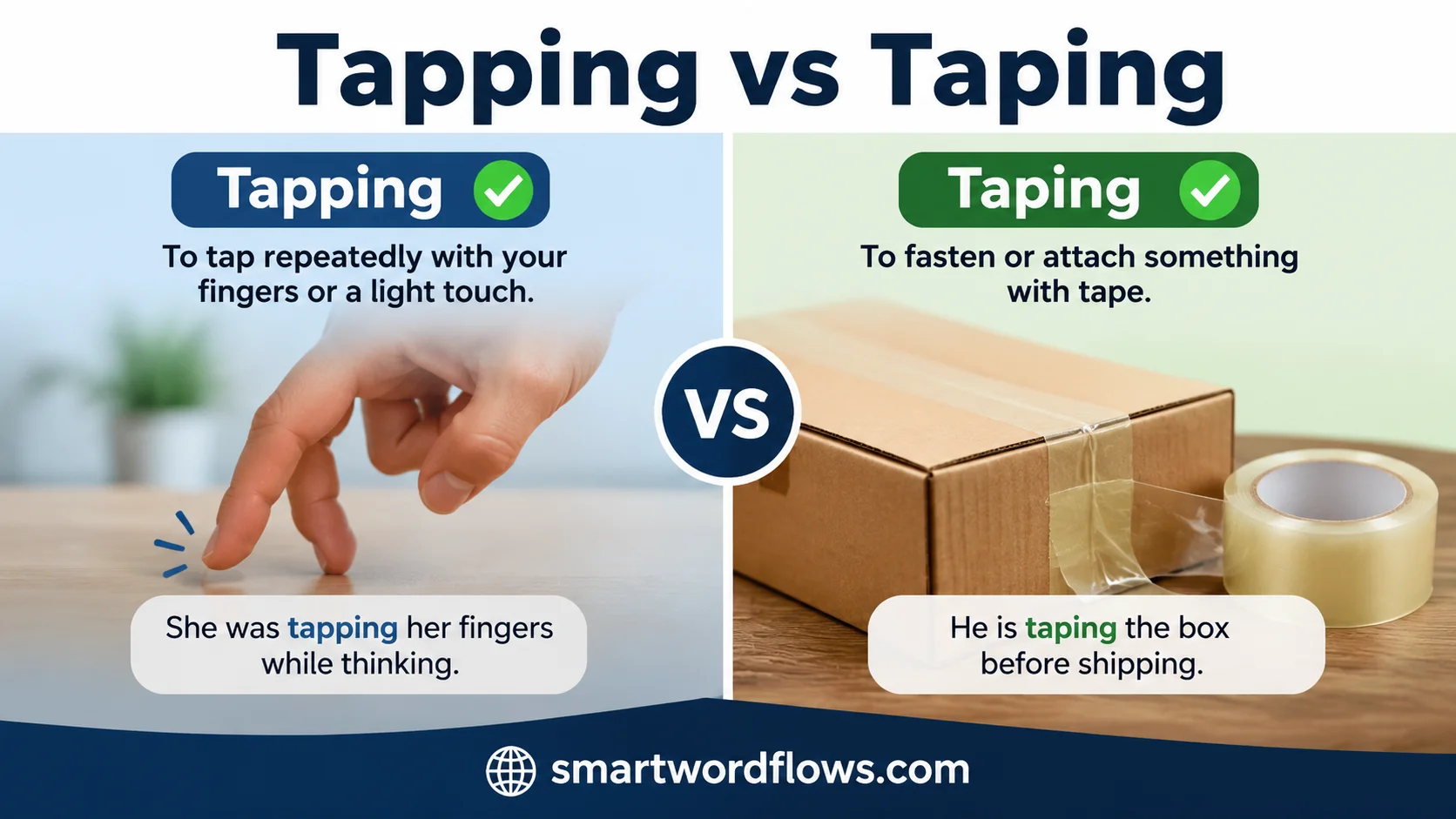

Tapping vs Taping Difference and Correct Usage is important because these words look similar but have different meanings. Tapping means lightly touching, hitting, or selecting something, while taping means using tape for wrapping, securing, attaching, or recording. This small spelling difference can change the meaning of a sentence. Understanding the correct usage helps English learners avoid confusion and choose the right word in academic writing, workplace communication, and everyday conversations with confidence.
The context helps you choose between tapping and taping. Tapping is common when describing touching, selecting, accessing, or making repeated hits. Taping is used for adhesive tape, support, stabilization, sealing, protection, or recording audio and video. Remembering this simple difference makes English grammar, word choice, and sentence construction easier. These practical usage tips can help learners avoid common mistakes, improve accuracy, and communicate clearly in professional and everyday situations.
Quick Answer: Tapping vs Taping Difference and Correct Usage
The main difference between tapping and taping comes from their root words:
| Word | Comes From | Meaning | Example |
| Tapping | Tap | Touching, hitting lightly, or accessing something | She is tapping the screen to open the app. |
| Taping | Tape | Attaching something with tape or recording something | He is taping the package before shipping it. |
A simple way to remember:
- Tapping = Touching
- Taping = Using tape or recording
If you use your finger, hand, or an object to make light contact, you are usually tapping.
If you use adhesive material or a recording device, you are usually taping.
Comparison Overview: Tapping vs Taping Difference and Correct Usage
The words tapping and taping may look similar, but their meanings, uses, and contexts are very different.
| Category | Tapping | Taping |
| Root verb | Tap | Tape |
| Pronunciation | TAP-ing | TAYP-ing |
| Main meaning | Making light contact or gaining access | Attaching, covering, or recording |
| Common objects | Screens, tables, doors, shoulders | Boxes, wires, injuries, videos |
| Type of action | Touching or striking | Securing or recording |
| Example sentence | He is tapping his fingers on the desk. | She is taping the box closed. |
The easiest way to identify the correct word is to look at the action being described. Ask yourself:
- Is someone making contact with something lightly? → Tapping
- Is someone using tape or creating a recording? → Taping
Main Differences Between Tapping vs Taping Difference and Correct Usage
The difference between tapping and taping becomes clearer when you understand their meanings and purposes.
Tapping Means Touching or Accessing Something
The word tapping comes from the verb tap, which means to hit or touch something lightly. It usually describes a quick movement rather than a strong impact.
For example:
- She is tapping her fingers on the table.
- He is tapping the screen to select an option.
- Someone tapped me on the shoulder.
The action is usually gentle. Unlike hitting or knocking, tapping involves a small amount of force.
You might tap a door, tap a glass, tap your foot, or tap a button on your phone.
Taping Means Attaching, Covering, or Recording
The word taping comes from the verb tape. It describes using tape to hold something together or recording something using a camera or audio device.
Examples:
- She is taping the package before mailing it.
- The production team is taping a television episode.
- The doctor recommended taping the injured finger.
Unlike tapping, taping usually involves a physical material called tape or a recording process.
What Does Tapping Mean?
Tapping is the -ing form of the verb tap. It describes an ongoing action involving a light touch, small strike, or access to something.
The meaning changes slightly depending on the situation.
Tapping as a Physical Action
One of the most common meanings of tapping involves touching something lightly.
Examples include:
- Tapping someone on the shoulder to get attention.
- Tapping a glass before making a speech.
- Tapping your foot while listening to music.
A tap is usually quick and controlled. You do not use much force.
For example, if someone gently touches your shoulder to call your name, they tap you. If they push or hit your shoulder, that becomes a different action.
Tapping on Digital Devices
Technology has created one of the most common uses of the word tapping.
Modern devices rely on touch gestures. Smartphones, tablets, smart watches, and payment systems often use tapping actions.
Examples:
- Tap the icon to open the application.
- She is tapping the screen repeatedly.
- Customers can tap their cards to make payments.
In digital communication, tap has become a standard word because touchscreen devices respond to light finger movements.
Tapping as Accessing Something
The phrase tapping into has a figurative meaning. It means using or taking advantage of something available.
Examples:
- The company is tapping into new markets.
- Writers tap into personal experiences for inspiration.
- The team tapped into customer feedback.
Here, nobody is physically touching anything. Instead, tapping means gaining access to a resource, idea, or opportunity.
Read More: Present vs Presant: Differences and Correct Usage
What Does Taping Mean?
Taping is the -ing form of the verb tape. It usually involves using tape to attach, protect, support, or cover something.
It also describes recording something.
Taping Objects Together
The most literal meaning of taping involves adhesive tape.
Examples:
- He is taping the broken book cover.
- She is taping the papers together.
- They are taping the wires for safety.
People use different types of tape for different purposes, including:
- Packing tape for shipping boxes
- Medical tape for injuries
- Electrical tape for wires
- Masking tape for painting projects
Taping for Recording
Another important meaning of taping relates to recording.
Before digital technology became common, people used physical tapes to record sound and video. The word remained even after modern cameras replaced traditional tape systems.
Examples:
- The journalist is taping an interview.
- The show was taped last night.
- The meeting was taped for future reference.
Today, people still use “taping” even when the recording happens digitally.
Taping in Sports and Medicine
Athletes often use taping techniques to support muscles and joints.
Examples:
- The trainer is taping the athlete’s ankle.
- The player taped his wrist before the match.
Medical taping can help provide support, improve stability, and protect injured areas during physical activity.
Common Mistakes When Using Tapping and Taping
Many people confuse these words because they look almost identical. However, their meanings cannot be exchanged.
Mistake: Using Taping for Touching a Screen
Incorrect:
She is taping her phone screen to open the app.
This means she is putting tape on the phone.
Correct:
She is tapping her phone screen to open the app.
The correct word is tapping because she is touching the screen.
Mistake: Using Tapping for Attaching Something
Incorrect:
He is tapping the box before shipping it.
This suggests he is lightly touching the box.
Correct:
He is taping the box before shipping it.
The correct word is taping because he is using tape to close the package.
Mistake: Confusing “Tap Into” and “Tape Up”
These phrases have completely different meanings.
| Phrase | Meaning | Example |
| Tap into | Access or use something | She tapped into her creativity. |
| Tape up | Cover or secure with tape | He taped up the package. |
A small spelling change creates a completely different idea.
How to Remember the Difference Between Tapping and Taping
A simple memory trick can prevent most mistakes.
Tapping has a connection with touch.
Both words begin with “tap,” which reminds you of a quick movement or light contact.
Examples:
- Tap the screen.
- Tap the table.
- Tap someone’s shoulder.
Taping has a connection with tape.
If something involves adhesive material or recording, think about tape.
Examples:
- Tape a box.
- Tape an injury.
- Tape a video.
A quick rule:
If your finger moves, you are probably tapping. If tape sticks, you are taping.
Examples of Tapping in Everyday Sentences
Here are practical examples showing how to use tapping correctly:
| Situation | Example Sentence |
| Phone use | She is tapping the screen to reply. |
| Getting attention | He tapped my shoulder politely. |
| Music | She was tapping her foot to the rhythm. |
| Work | The company is tapping into new opportunities. |
| Nervous habit | He kept tapping his fingers during the interview. |
Tapping appears frequently in daily life because humans naturally make small repeated movements.
Examples of Taping in Everyday Sentences
Here are examples showing the correct use of taping:
| Situation | Example Sentence |
| Packaging | She is taping the shipping box. |
| Recording | They are taping the podcast episode. |
| Sports | The trainer is taping his ankle. |
| Repair | He is taping the torn paper. |
| Decorating | She is taping the edges before painting. |
The key idea remains the same: taping involves tape or recording.
Tapping vs Taping in Different Contexts
Technology Context
In technology, tapping is the correct word because users interact with devices through touch.
Examples:
- Tap the menu button.
- Tap your card on the payment terminal.
- Tap the notification.
Using “taping” in these situations changes the meaning completely.
Business Context
Businesses often use the phrase tapping into when discussing resources or opportunities.
Examples:
- Companies tap into customer data.
- Organizations tap into employee skills.
- Brands tap into new audiences.
This usage is not physical. It describes accessing something valuable.
Media Context
In media, taping refers to recording.
Examples:
- The studio is taping a new episode.
- The interview was taped earlier.
Although many recordings are now digital, the traditional term remains common.
Bilkul. Neeche 5 FAQs aur conclusion simple English mein diye hain.
FAQs:
1. What is the difference between tapping and taping?
Tapping means lightly touching, hitting, or selecting something. Taping means using tape for attaching, wrapping, securing, or recording something.
2. When should I use tapping?
Use tapping when you mean lightly touching or hitting something, such as tapping a screen, table, or button.
3. When should I use taping?
Use taping when you mean using tape to secure, attach, wrap, seal, or record something.
4. Why are tapping and taping confusing?
They look and sound very similar, but their spelling and meanings are different. The extra p in tapping changes its grammatical form and meaning.
5. How can I remember the difference?
Think of tapping as an action involving a tap or touch, while taping is connected with tape, such as wrapping, securing, or recording.
Conclusion
Understanding tapping vs taping becomes easy when you focus on their meanings and context. Use tapping for touching, hitting, selecting, or accessing something, and use taping for using tape, securing, attaching, wrapping, or recording. Remembering this simple difference can help you avoid common spelling mistakes and improve your English grammar, writing, and everyday communication.