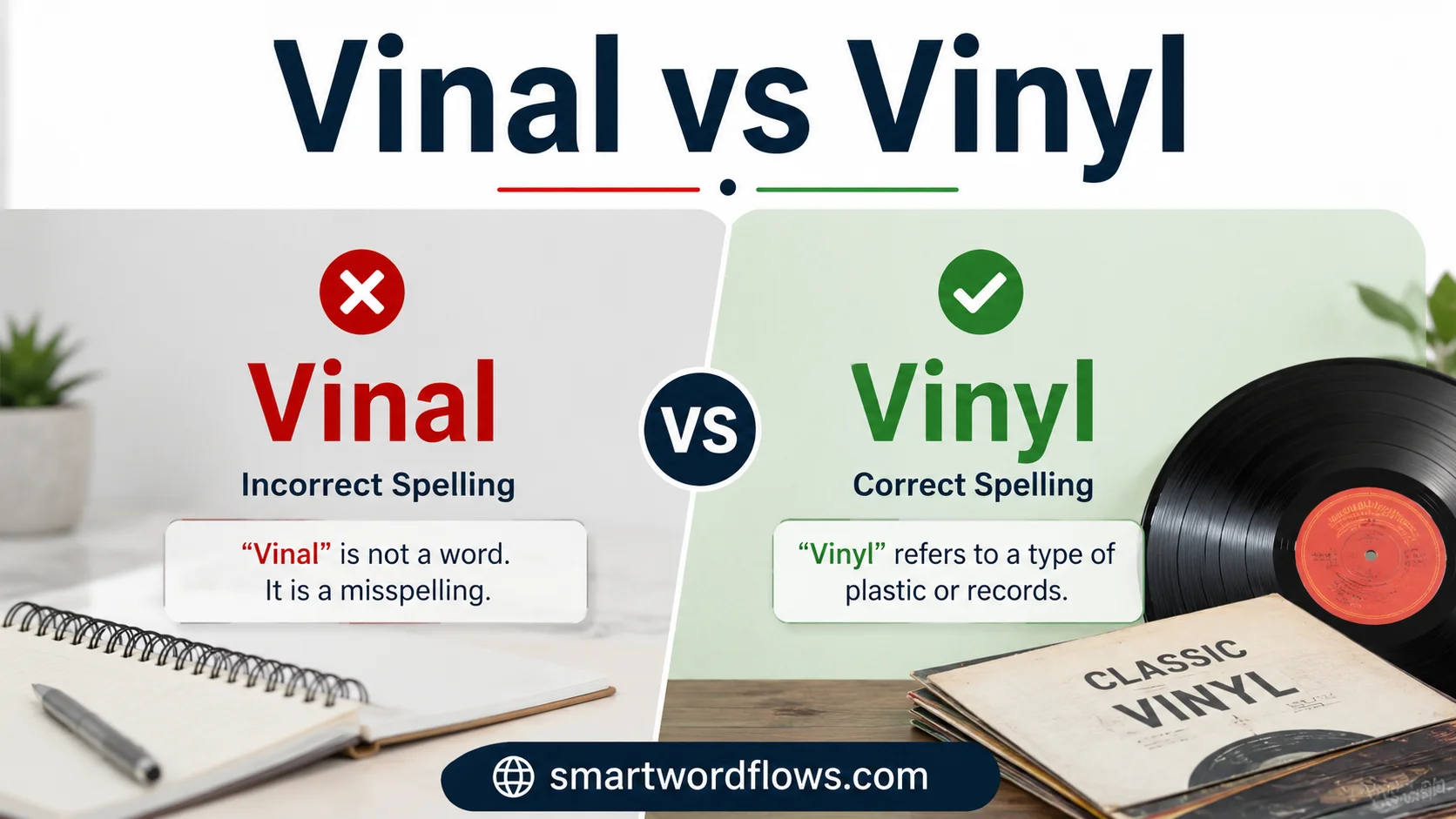

Vinal vs Vinyl is a common confusion for many English speakers because both words look and sound similar. The correct spelling for everyday English is vinyl, especially when talking about durable flooring, music records, siding, and vinyl materials. In contrast, vinal is rare, mostly technical, and may appear as a technical term in chemistry. Knowing this difference helps you choose the correct term and avoid misuse in normal writing.
The vinal meaning can cause confusion when people write vinal flooring instead of vinyl flooring or vinal records instead of vinyl records. This mistake may confuse readers and appear unprofessional. A useful practical tip is to remember vinyl for common products, materials, and daily life. These usage examples make the correct usage easier to understand, while pronunciation, meanings, and real-life examples can further help you write these words correctly.
Quick Answer
Vinyl is the correct word in almost every everyday context.
Use vinyl when you mean:
- vinyl records
- vinyl flooring
- vinyl siding
- vinyl wraps
- vinyl material
- vinyl plastic
Use vinal only when it is part of a proper name, such as a surname, business name, or place name.
If you are writing for general readers, vinyl is the safe and correct choice.
Comparison Overview
Here is the simplest way to see the difference.
| Feature | Vinal | Vinyl |
| Standard English word | No | Yes |
| Common dictionary spelling | Usually no | Yes |
| Used for records | No | Yes |
| Used for flooring | No | Yes |
| Used for siding | No | Yes |
| Used for wraps | No | Yes |
| Used as a name | Yes | Rarely |
| Best for professional writing | No | Yes |
That table tells the whole story. In practical English, vinyl is the word you want.
Main Differences Between Vinal vs Vinyl
Vinyl is the standard spelling
Vinyl is the accepted spelling for the word people use in music, home improvement, manufacturing, and design. It refers to a class of synthetic materials made from vinyl compounds. In daily life, most people know it as the surface on a record, a floor covering, a wall wrap, or a siding product.
Vinal is not the everyday word
Vinal is not the common spelling for that material. In most situations, writing vinal where you mean vinyl will be treated as a spelling error. That matters because readers notice spelling fast. Search engines do too.
Vinyl carries the meaning people expect
When someone sees vinyl, they immediately understand the context. They know whether you mean music, home design, or a plastic-based material. Vinal does not give the same clear signal.
Context decides whether Vinal is correct
There are cases where Vinal can be correct, but those cases are usually names. For example, it may appear in a person’s last name, a company name, or a brand name. Outside those uses, it is not the word most writers should choose.
What Does Vinyl Mean?
Vinyl is a word used for a group of synthetic materials based on vinyl compounds. In simple terms, it describes a man-made substance used in many products because it is flexible, durable, and easy to shape.
Depending on context, people use vinyl to describe:
- records for music playback
- flooring for homes and offices
- exterior siding for buildings
- adhesive wraps for cars and signs
- synthetic leather-like surfaces
- packaging and industrial materials
The word has become common because the material appears everywhere. You see it in homes, cars, stores, offices, and music collections. That is why spelling it correctly matters. It is not a rare technical term. It is a regular word people read every day.
Is Vinal a Real Word?
Yes, vinal can be a real word in limited cases, but not in the sense most people mean when they compare it with vinyl.
When Vinal may be correct
You may see Vinal used as:
- a surname
- a business name
- a place name
- a proper noun in historical records
In those cases, the capital letter matters, because the word is a name. That is very different from the common material term vinyl.
When Vinal is wrong
If you are writing about:
- records
- flooring
- siding
- wraps
- plastic material
- product labels
- home improvement
- music
then vinal is almost certainly the wrong spelling.
Why this distinction matters
This is one of those small spelling issues that can change how polished your writing feels. A reader may not stop and say, “I know what they meant,” but they will still notice the error. In business writing, blog posts, store listings, and school work, that can weaken trust.
Why People Confuse Vinal and Vinyl
People confuse the two spellings for a few simple reasons.
They sound similar
When spoken aloud, vinal and vinyl can sound close. That makes it easy to type the wrong one if you are writing quickly.
Autocorrect can be unhelpful
Sometimes autocorrect guesses the wrong word or fails to flag the mistake. That can leave the wrong spelling sitting in a draft without anyone noticing.
Search behavior affects spelling
People often type words the way they hear them. If someone has only heard the term once or twice, they may guess the spelling and land on vinal by mistake.
The word vinyl appears in many contexts
Because vinyl shows up in music, home design, and product names, it becomes easy to assume there are multiple spellings. There usually are not.
Common Uses of the Word Vinyl
The word vinyl shows up in a lot of places. That is part of why it is worth learning the correct spelling once and for all.
Vinyl records
Vinyl records are one of the best-known uses of the word. People collect them for the listening experience, the artwork, and the physical format. Many music fans prefer records because they like the ritual of playing them.
Vinyl flooring
Vinyl flooring is popular in homes, apartments, offices, and retail spaces. People like it because it is often durable, affordable, and easier to maintain than some natural materials. It comes in many styles, including designs that mimic wood or stone.
Vinyl siding
Vinyl siding is used on building exteriors. It is common because it can handle weather well and does not always need as much maintenance as other materials.
Vinyl wraps
Vinyl wraps are used on vehicles, signage, walls, and products. Businesses use them to advertise, decorate, or protect surfaces.
Vinyl upholstery and finishes
Vinyl also appears in furniture, fashion, and interior design. It can give a surface a sleek look while remaining practical and relatively easy to clean.
Read More: Emaculate vs. Immaculate: Which One Is Correct?
Vinyl vs Vinal in Real Life
A spelling mistake may seem small, but it changes how a reader sees your writing. Here is a simple look at how the two words behave in actual use.
| Example Type | Correct Form | Incorrect Form |
| Music collection | vinyl records | vinal records |
| Home improvement | vinyl flooring | vinal flooring |
| Building exterior | vinyl siding | vinal siding |
| Car advertising | vinyl wrap | vinal wrap |
| Material description | vinyl surface | vinal surface |
If your sentence is about a material or product, vinyl is the correct spelling almost every time.
Examples of Vinyl Used Correctly
Here are some natural examples.
- I bought a vinyl record from the local shop.
- The kitchen has vinyl flooring.
- They installed vinyl siding on the house.
- The company designed a custom vinyl wrap for the van.
- Her jacket has a shiny vinyl finish.
- The studio sells new and used vinyl albums.
- We chose vinyl because it is easier to clean.
- The sign was printed on vinyl material.
These examples sound normal because they use the standard spelling.
Examples Where Vinal Could Be Correct
There are a few situations where Vinal may appear correctly.
- Vinal as a last name
- Vinal as a company name
- Vinal in a historical or official record
- Vinal as part of a branded product name
For example, a business might call itself Vinal Design Studio. That would be correct because it is a name, not a common noun.
A Practical Case Study
Let’s look at a simple real-world example.
A home improvement blog published an article about vinal flooring. The article ranked poorly in search results and got comments from readers pointing out the error. The editor later changed the spelling to vinyl flooring, updated the title, and improved the article’s credibility.
That small correction mattered for three reasons:
- readers trusted the article more
- search engines understood the topic better
- the site looked more professional
This is a good reminder that spelling is not just about grammar. It also affects clarity, authority, and search visibility.
Why Correct Spelling Matters and Writing
If you write online, spelling can affect more than style. It can affect whether people find and trust your content.
Search engines recognize standard spelling better
Most people search for vinyl flooring, not vinal flooring. If you use the wrong spelling, you may miss traffic from readers who are typing the correct term.
Readers judge quickly
People scan fast. A misspelling can make them wonder whether the rest of the content is reliable too.
Product listings depend on accuracy
If you sell products, the correct spelling helps customers find what they want. It also reduces confusion.
Professional writing needs precision
Emails, blog posts, reports, and website copy all benefit from clean spelling. It shows care and attention.
How to Remember the Correct Spelling
Here is an easy memory trick.
Vinyl has a y in the middle, just like the word people actually use.
A simple way to remember it:
- vinyl = the real material word
- vinal = usually a name or misspelling
You can also connect it to the idea that the correct word has a familiar shape. The spelling feels more complete because it is the standard form people expect to see.
Common Mistakes to Avoid
Here are the most common mistakes writers make with this word.
- writing vinal when they mean vinyl
- assuming both spellings are interchangeable
- using the wrong spelling in product titles
- missing the error in captions or ads
- trusting voice-to-text without checking the result
A quick proofread usually catches the issue.
Quote to Keep in Mind
A correct word does not just fill space. It builds trust.
That is especially true in writing about products, materials, and search-friendly content.
Vinyl in Everyday Language
You do not need to be an expert to use vinyl correctly. You just need to remember the context.
Use vinyl when talking about:
- music records
- floor coverings
- wall graphics
- surface wraps
- outdoor siding
- synthetic materials
That covers most everyday uses. If your sentence fits one of those categories, vinyl is almost certainly the right choice.
Main Differences at a Glance
Here is a quick summary of the most important points.
- Vinyl is the standard English spelling.
- Vinal is usually a proper noun or a misspelling.
- Vinyl works in records, flooring, siding, and wraps.
- Vinal should not replace vinyl in general writing.
- The spelling you choose affects clarity, trust, and .
FAQs:
1. Is “vinal” or “vinyl” correct?
Vinyl is the correct spelling in everyday English. Vinal is usually a misspelling or a rare technical term.
2. What is the difference between vinal and vinyl?
The main difference is usage. Vinyl is common for flooring, records, siding, and other materials, while vinal is uncommon.
3. Is vinal flooring correct?
No. Vinyl flooring is the correct phrase. Writing vinal flooring is generally a common mistake caused by confusing the two words.
4. Is vinal a real word?
Yes, vinal can appear as a technical term, particularly in chemistry, but it is rare and not normally used in general writing.
5. How can I remember vinal vs vinyl?
A simple practical tip is to remember vinyl for common products such as flooring, music records, and vinyl materials.
Conclusion
Understanding Vinal vs Vinyl is simple once you remember that vinyl is the standard correct spelling for everyday English. Use vinyl for common products, materials, flooring, and records, while vinal should only be used when its specific technical meaning applies.